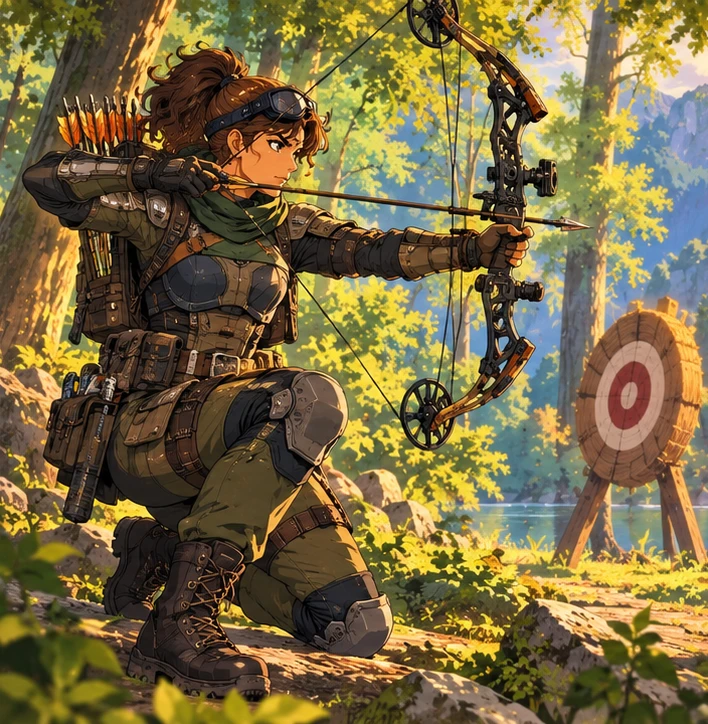
The class toolkit
Named progression abilities are part of the class pool. Level gates are not extra ability slots. Selected-path, resource, and activation requirements still apply.
| Level | Ability | In practice |
|---|---|---|
| 2 | Snare Line | Place a basic trap to contest a route or punish an approach. |
| 4 | Aimed Shot | Build Focus and release a carefully aimed ranged attack. |
| 5 | Trail Specialty | Apply the selected path's pet, speed or analysis technique. |
| 6 | Volley | Fire an area pattern to pressure a group. |
| 8 | Revealing Shot; Heavy Shot | Expose a concealed threat through a legal detection attack or fire a heavy shot. |
| 9 | True Shot Aura | Strengthen allied ranged performance through a practiced aura. |
| 10 | Kill Shot | Commit the Ranger's ultimate precision attack to a valid target. |
In the story and on the track
Rangers use ranged weapons, traps, and tracking. Aiming and successful hits build Focus for stronger shots. Rangers read a route by the movement that has passed through it. Their players notice the detour a trap encourages, the sightline a hurried opponent forgets, and the difference between a retreat and bait. Archers keep that reading in motion, Hunters turn it into ambush, and Trackers share a more informed picture with the party. A successful hunt often looks effortless only because the Ranger paid attention before the first shot.
Resource rhythm
Aiming and successful hits build Focus. Powerful shots spend it.
Specialization paths
Archer — high-speed fire and mobility (Agility); Hunter — stealth, ambushes and pets (Dexterity); Tracker — nature magic and analysis (Intelligence).
How it fits a build
Class and Spec each occupy one of the four core ability slots. Six stat slots complete the ten-ability layout. Class progression abilities are slot-free and level-gated; selecting a path does not automatically grant every alternative path. Costs, targets, timing, and access requirements still apply.
Keep exploring.
Source & editorial notes
October 2026 Classes reader v004, page 62. Descriptive reference, not a guarantee of implemented game behavior.
About this guide