The class toolkit
Named progression abilities are part of the class pool. Level gates are not extra ability slots. Selected-path, resource, and activation requirements still apply.
| Level | Ability | In practice |
|---|---|---|
| 2 | First Form | Practice basic strikes in the first chosen martial style and generate Chi. |
| 4 | Second Form | Learn a second martial style and shift into its techniques. |
| 5 | Inner Discipline | Shape Chi technique around the selected specialization. |
| 6 | Third Form; Sweeping Circle | Learn a third style and use a sweeping area technique. |
| 8 | Refined Technique | Use an advanced Chi technique with disciplined timing. |
| 9 | Perfect Balance | Coordinate learned styles for stronger synergy. |
| 10 | Touch of Death / Serenity | Choose a decisive offensive technique or an ultimate state of composure. |
In the story and on the track
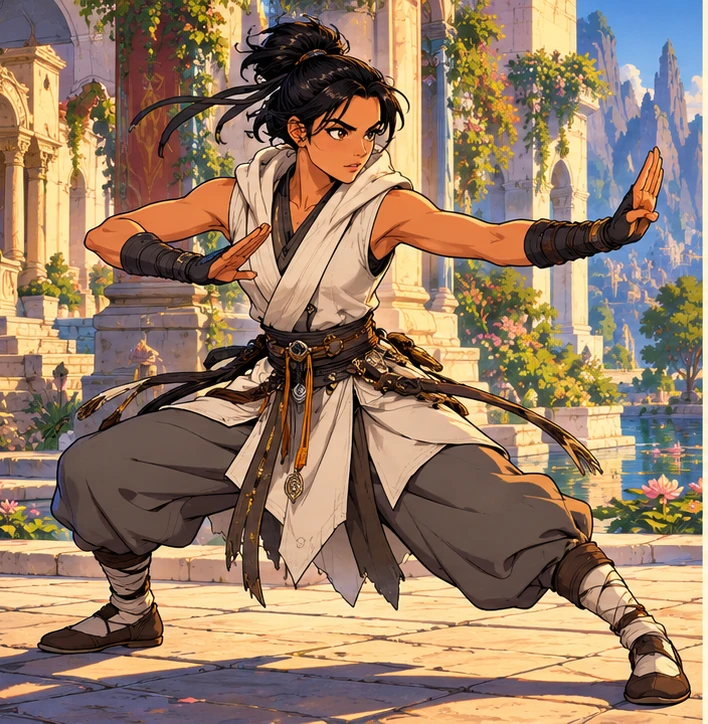
Monks switch Martial Arts Styles and build Chi through attacks and defense. They spend Chi on finishers, ranged energy techniques, or healing. Monk players practice until a change of Style feels as natural as a breath. Some favor the sharp release of a Chakra Master's ranged technique; others find satisfaction in a Qi Mender's precise recovery work or a Dragonfist's connected strikes. Training partners recognize each other's rhythm long before they memorize an ability name. In a chaotic encounter, the Monk's discipline is visible in the choice to answer one movement with the right next movement.
Resource rhythm
Attacks and defensive actions generate Chi. Monks spend it on finishers and other techniques.
Specialization paths
Chakra Master — ranged energy (Intelligence); Qi Mender — pressure-point and chi healing (Charisma); Dragonfist — physical combinations (Strength).
How it fits a build
Class and Spec each occupy one of the four core ability slots. Six stat slots complete the ten-ability layout. Class progression abilities are slot-free and level-gated; selecting a path does not automatically grant every alternative path. Costs, targets, timing, and access requirements still apply.
Keep exploring.
Source & editorial notes
October 2026 Classes reader v004, page 54. Descriptive reference, not a guarantee of implemented game behavior.
About this guide